



You step into the shower expecting a strong spray and get a weak trickle instead. Or the kitchen faucet takes forever to fill a pot. Low water pressure is one of the most common complaints homeowners bring to us in Kansas City and Overland Park, and the cause isn’t always where you’d expect. Sometimes it’s a ten-minute fix at a single faucet. Other times it’s a sign of something hiding in your walls or under your yard.
The key is working out whether the problem is local (one fixture) or system-wide (the whole house), because that tells you where to look.
Key Takeaways
- Low water pressure at one faucet usually points to a clogged aerator or fixture. Low pressure throughout the house points to a bigger issue.
- Common culprits include mineral buildup, a partly closed valve, a failing pressure regulator, corroded pipes, and hidden leaks.
- If only your hot water is weak, the water heater is the first place to look.
- A sudden pressure drop, wet spots in the yard, or a higher-than-normal water bill can signal a leak and should be checked promptly.
- A licensed plumber can find the cause with pressure testing and inspection rather than guesswork.
What Counts as Low Water Pressure?
Low water pressure means water arrives at your fixtures with less force than normal. Most homes work best with pressure in roughly the 40 to 60 psi range, and anything noticeably below that tends to feel weak at the shower or slow at the sink. You don’t need a gauge to notice it: if showers, faucets, and appliances like the dishwasher or washing machine feel sluggish, pressure is the likely cause.
For a broader overview of common household pressure problems, The Spruce’s guide to home water pressure problems is a useful companion read.
Why Is the Water Pressure Low at Just One Faucet?
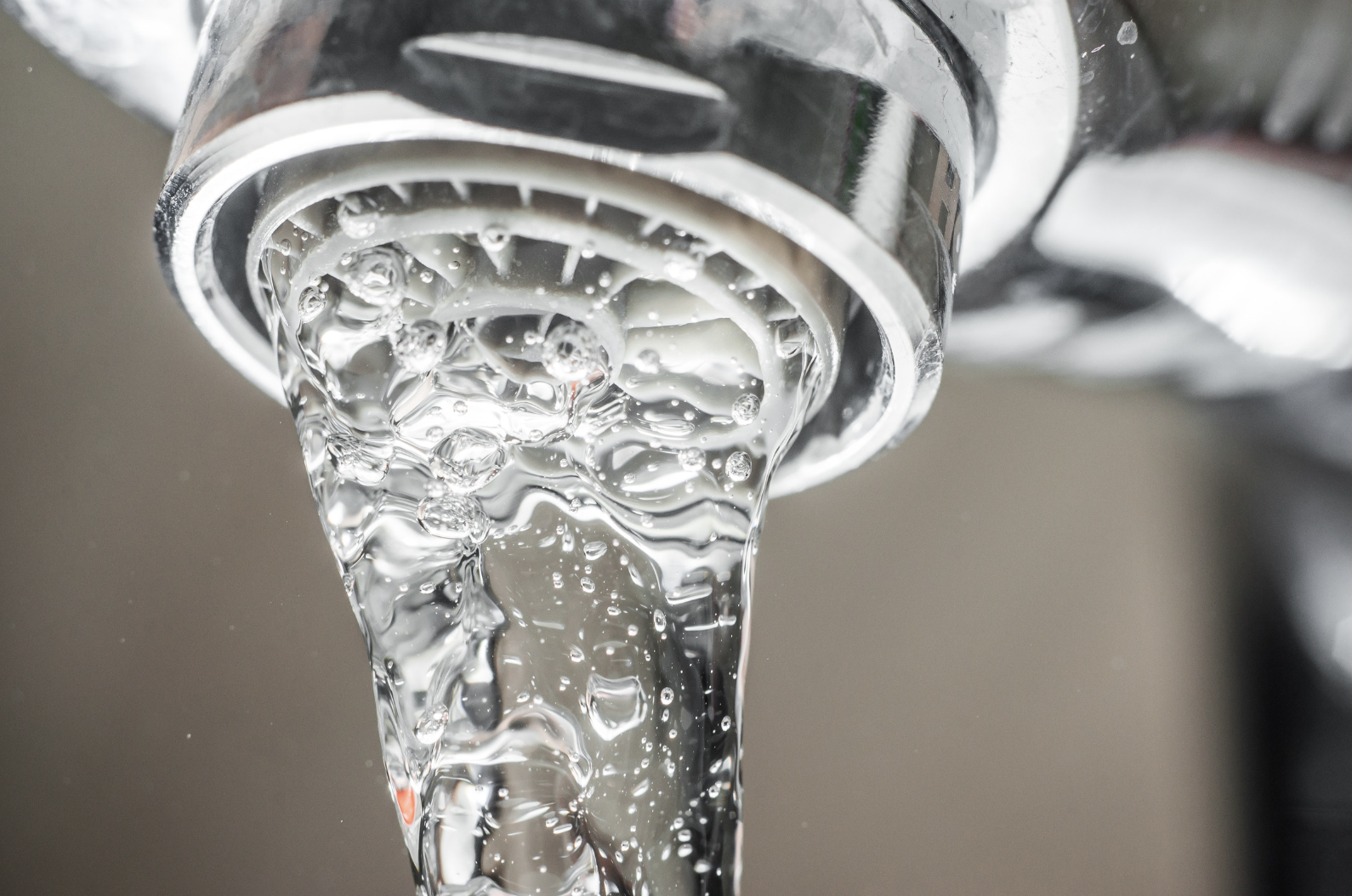
When only one fixture is weak, the cause is almost always at that fixture. The most frequent reason is a clogged aerator, the small screen at the tip of the spout that collects sediment and mineral flakes over time. Kansas City-area water is on the harder side, so scale builds up quickly.
Other single-fixture causes include a clogged showerhead, a partially closed shutoff valve under the sink, or a worn cartridge inside the faucet. Unscrewing the aerator or showerhead and soaking it in white vinegar often restores flow.
What Causes Low Water Pressure Throughout the House?
If every fixture is affected, the problem sits upstream. The usual suspects are:
- A partly closed main shutoff or meter valve. Sometimes a valve gets bumped during other work and never fully reopens.
- A failing pressure regulator. Many homes have a pressure-reducing valve near the main line. When it wears out, pressure can drop or swing up and down.
- Corroded or aging pipes. Older galvanized steel pipes rust from the inside and narrow over time, restricting flow. If your home is more than 25 years old, this is worth ruling out, and a repiping evaluation can tell you whether replacement makes sense.
- A hidden leak. Water escaping before it reaches your fixtures means less arrives at the tap. Unexplained wet patches, a spinning water meter when everything is off, or a rising water bill are the telltale signs.
- A municipal supply issue. If your neighbors are noticing the same thing, the cause may be on the city side.
Is It Only Your Hot Water?
If cold water is strong but hot water is weak, look at the water heater. Sediment buildup inside the tank, a partly closed valve on the heater, or scale in the hot-water lines can all restrict flow. Hard water makes this worse, since minerals collect on heating surfaces and inside pipes. A water softener can reduce that buildup over time, protecting both your pipes and your fixtures.
What Can You Check Yourself First?
Before calling anyone, these quick checks can save you a visit:
- Test several fixtures. Is it one tap, one bathroom, or the whole house?
- Clean aerators and showerheads. Soak them in vinegar to dissolve scale.
- Check the shutoff valves. Make sure the valve under the fixture and your main shutoff are fully open.
- Check hot versus cold. This narrows the problem to the water heater or the supply line.
- Watch your water meter. If it moves while all water is off, you likely have a leak.
If these checks don’t solve it, that’s the point to bring in a professional.
When Should You Call a Plumber for Low Water Pressure?
Call a plumber if the pressure drop is sudden, affects the whole house, comes with signs of a leak, or doesn’t improve after the simple fixes above. Guessing at pressure problems can waste money, and ignoring a leak can damage floors, walls, and foundations.
At Quick Relief Plumbing, we start by finding the actual cause: checking pressure at the source, inspecting valves and the regulator, and looking at pipe condition and possible leaks. You’ll get an upfront price before any work begins, with no surprise charges.
Quick Relief Plumbing is family-owned and has served Kansas City and Overland Park since 2012. Owner Anthony Ficara grew up in the trade, working alongside his father from a young age and plumbing new-construction homes by his late teens. Every technician we send is licensed, insured, background-checked, and drug-tested, and our work is backed by a 100% satisfaction guarantee and a 4.9-star rating across more than 600 Google reviews.
Frequently Asked Questions
What is normal water pressure for a home? Most homes do well at roughly 40 to 60 psi. Much lower feels weak, and much higher can stress pipes and fixtures.
Why did my water pressure suddenly drop? A sudden drop often points to a leak, a closed or failing valve, or a city supply issue. If your neighbors are fine, call a plumber to check for a leak.
Can hard water cause low water pressure? Yes. Mineral scale builds up in aerators, showerheads, water heaters, and pipes, narrowing the path water travels through.
Can I fix low water pressure myself? Cleaning aerators and checking valves is safe for most homeowners. Regulator replacement, leak repair, and repiping are best left to a licensed plumber.
Need help with low water pressure? Contact Quick Relief Plumbing or call 913-207-0779 for 24/7 service across Kansas City and Overland Park.